Mark III Therapeutic Body-Sleeve
Tinea and Leah: [Cyberpunk, Alien Incursions, Murder and Mayhem, Girl's Love (WLW)]Mark III Therapeutic Body-Sleeve is the medical device that allows a shattered body to move again when ordinary flesh cannot. It wraps the wearer from neck to toe, interfaces with the spinal column above the injuries, reproduces musculature through artificial muscles, and uses an exoskeleton to stabilize broken bones. In the narrative, its importance lies not only in physical rescue: the Sleeve restores agency while forcing its users to confront altered sensation, exposed embodiment, and the ethics of treatment after violence.
Design and Medical Function
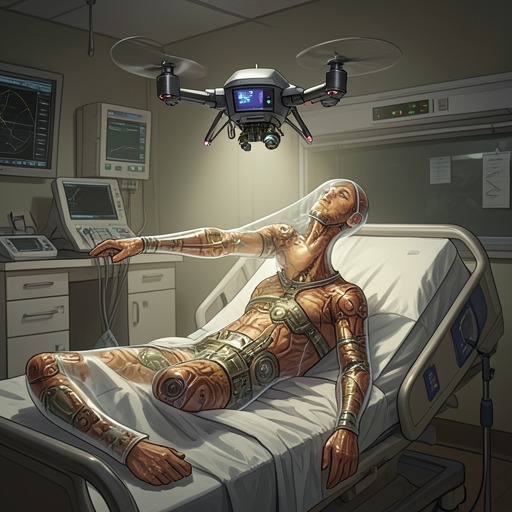
Mark III Therapeutic Body-Sleeve is recommended when immediate full mobility is necessary after catastrophic bodily damage. The garment covers the body from the neck down and connects to the spinal column above the injured region. Its artificial muscles replace lost or unusable musculature, while its exoskeleton supplies the stability that shattered bones can no longer provide. It also monitors and analyzes the wearer's medical condition, and can apply pressure to control internal bleeding. The device is therefore both a prosthetic movement system and an active emergency-care instrument rather than simple protective clothing.
The Sleeve becomes necessary after injuries so extensive that ordinary recovery cannot be awaited. The medical assessment states that the patient is losing little blood but has deadly internal injuries and will soon lose consciousness; accumulated points make recovery possible, but only with appropriate intervention. The device answers that immediate crisis by making a body function before it has physically healed. Its promise of mobility is consequently inseparable from the violence that made such artificial support necessary.
First Use and the Rebuilt Body
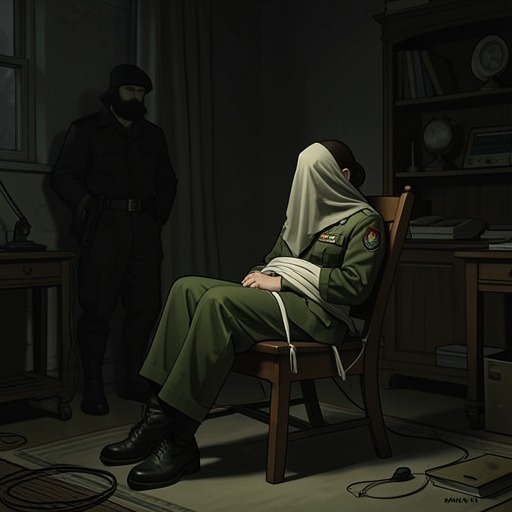
The Sleeve's first fitting is invasive and humiliating as well as miraculous. Its attendant removes the patient's clothing and wraps the body into a mummy-like covering from the toes to the neck, including the arms. A small sting below the shoulders is followed by the return of bodily sensation, though that sensation is dull and artificial. Most importantly, the legs exist again as usable limbs, even though the underlying body remains catastrophically damaged. The Sleeve gives back action before it gives back normal perception.
The garment also exposes the wearer to a new kind of bodily self-consciousness. Because it effectively sculpts the lower body, it leaves little to the imagination and creates an urgent need for additional covering. The device is medically functional but socially and psychologically conspicuous: it replaces privacy with visible reconstruction. Its restored mobility thus carries an unsettling reminder that the body being inhabited is no longer the body that was injured.
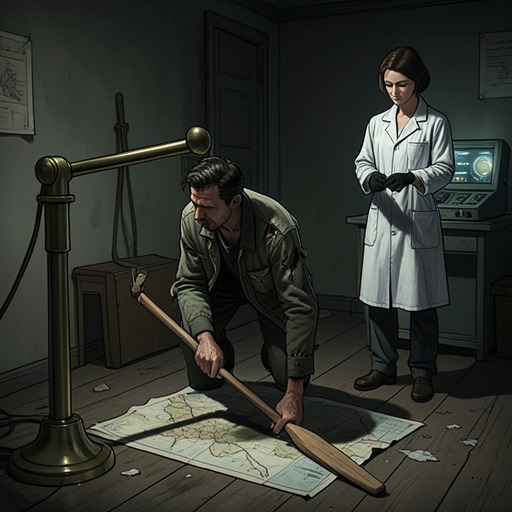
The Sleeve's original operating mode includes knives used to remove clothing from injured patients. During the first emergency, those blades peel away trousers after every bone from the feet to halfway up the spine has been broken. The device is consequently nicknamed through a series of comic and threatening titles, including Sgt. Stabby, Doctor Knives, Sir Stab-A-Lot, and Knife-Wielding Ripper Suit. The humor does not erase the danger. When the garment kneels backward onto the patient's legs, the knives barely touch the trousers before the fabric falls apart, the displayed point count drops sharply, and the patient nearly loses consciousness while seeing that the supposed legs are not legs at all.
Treatment, Choice, and Leah's Care
Later, Mark III Therapeutic Body-Sleeve becomes part of Leah's treatment rather than remaining exclusively the rescuer of its first wearer. Tinea considers buying a one-handed weapon that will not frighten the injured girl, because every available point may be needed for Leah's recovery. The decision places the Sleeve within a larger economy of scarce medical resources: equipment, weapons, regenerative nanites, and bodily healing compete for the same points, and care requires deliberate prioritization.
The first attempt to introduce the device to Leah reveals how easily medical technology can reproduce the threat of her past. Tinea jokes that the Sleeve only needs to strip some of Leah's skin. Leah's expression changes from amusement to genuine fear, and Tinea immediately recognizes that the joke has touched trauma rather than merely startled her. Tinea apologizes, deactivates the Sleeve's knives, and embraces Leah while admitting that the remark was thoughtless. The device cannot be separated from the memory of forced bodily violation simply because its purpose is therapeutic.
Once the blades are disabled, Tinea explains their limited function: they are meant to remove clothing from patients whose injuries make ordinary undressing impossible, as happened when Tinea's own legs and spine were broken. Leah is then offered a choice between trying the Sleeve and being carried. After considering the danger, she chooses to use it and asks to enter it like a normal person. Tinea spreads it out for her after confirming that the knives are inactive. This exchange turns fitting the device from an imposed procedure into a collaborative act in which safety, explanation, and consent matter as much as mechanical effectiveness.
The Sleeve's role in Leah's rehabilitation also shows that not every injury can be solved by one device. Regenerative nanites may repair cut vocal cords, but they cannot create the additional mass needed for a damaged tongue and eyes; specialized nanites, prosthetics, or the more advanced bionites produced by the body may be required. The Sleeve can restore movement and stabilize trauma, but it does not make the injured person whole in every dimension. Medical care remains a sequence of adaptations rather than a single technological reset.
Trauma and the Ethics of Contact
The device is repeatedly linked to the problem of touch. During Leah's flashback, Tinea asks Tynea what to do while holding her. Tynea advises calm speech and warns against seeking additional contact, though the existing touch does not appear to trigger bad memories. The recommendation establishes a boundary around care: even affectionate contact must be evaluated in relation to the patient's immediate mental state. The Sleeve's earlier association with stripping and knives makes that caution especially charged, because a therapeutic apparatus can resemble an instrument of helplessness when control is removed.
The same principle governs recovery after the flashback. Tynea explains that Tinea cannot prevent future episodes or become Leah's entire solution. Leah must develop enough independence to rely on her own person, while professional care—not a romantic partner alone—must address her health. The Sleeve therefore sits inside an ethical structure that rejects the idea that technical intervention or personal devotion can erase trauma. It can make movement possible, but it cannot substitute for consent, psychological recovery, or an autonomous self.
When Tinea later collapses while trying to help Leah, Leah wakes with her own limbs still absent and finds Tinea lying across her lap, apparently unconscious but still breathing. The memory of being rescued and cared for by Tinea holds the fear of her altered body at bay. The scene reverses the Sleeve's earlier logic: treatment is no longer simply something done to a patient, and Leah's survival is expressed through her ability to support and comfort another vulnerable body. The device's significance consequently expands from prosthetic function to a shared language of dependence, caution, and reciprocal care.
Embodiment and Narrative Significance
Mark III Therapeutic Body-Sleeve dramatizes the unstable boundary between disability, enhancement, and identity. Its first user experiences artificial sensation and restored legs before biological repair, while later bodily transformation produces slender, lean muscles and a graceful physical form. These contrasts show that bodily continuity is not guaranteed by flesh alone. A body can be rebuilt, augmented, or transformed and still remain the site from which a person negotiates agency and self-recognition.
The device also anticipates the broader Vanguard condition. As Leah observes, Vanguard become less human as they grow stronger because the human body cannot meet the demands of combat. The Sleeve is an early, intimate version of that exchange: survival and capability arrive through artificial structures that make the body more functional while making its difference impossible to ignore. Its narrative power comes from refusing to present repair as a simple return to normality. The Sleeve saves lives, restores choices, and enables action, yet it also preserves the memory of injury in every artificial sensation and every negotiated movement.